


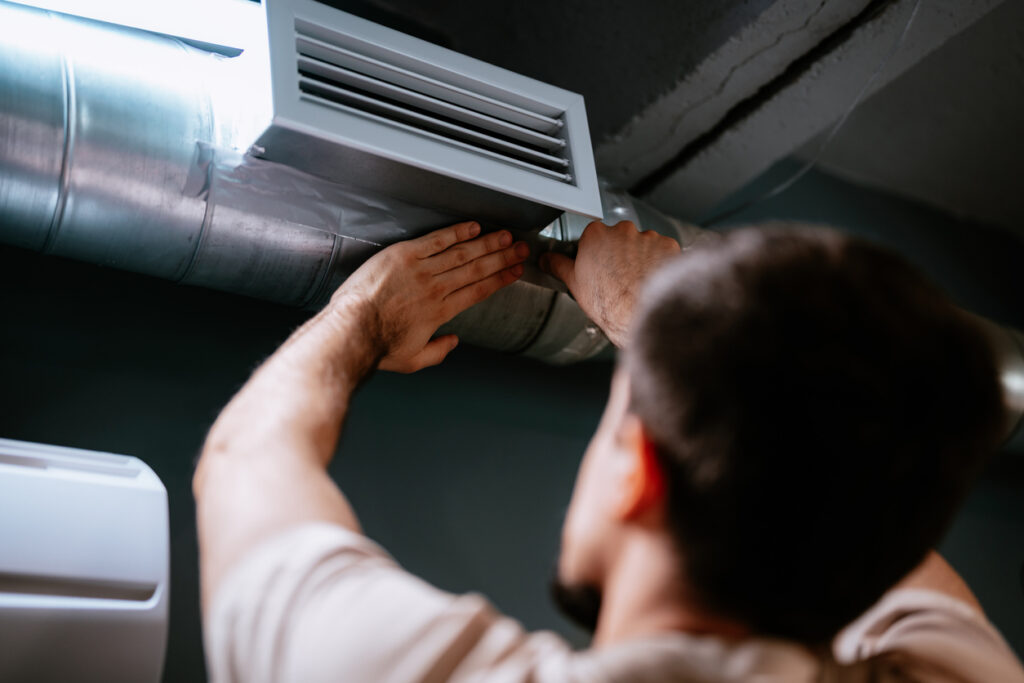
Insulating your ductwork is one of the most overlooked ways to improve your home’s comfort and energy efficiency. Many homeowners focus on upgrading HVAC equipment, but even the best system can’t perform well if air is lost before it reaches your living spaces.
If you’ve ever wondered how to insulate your ductwork, understanding the basics can help you decide whether this is a DIY project or one best handled by a professional.
Why Ductwork Insulation Matters
Your HVAC ductwork carries heated or cooled air from your system to every room in your home. When ducts run through unconditioned areas like attics, crawlspaces, or garages, they are exposed to extreme temperatures. Without insulation, air can lose heat in the winter or gain heat in the summer before it ever reaches your vents.
Properly insulated ductwork helps:
- Maintain consistent indoor temperatures
- Reduce energy loss and utility bills
- Improve HVAC system efficiency
- Prevent condensation and moisture problems
Insulation keeps the air inside your ducts closer to the temperature your system produces, which means your HVAC equipment doesn’t have to work as hard to keep your home comfortable.
Where Ductwork Should Be Insulated
Not all ductwork requires insulation, but many homes benefit from it. Ducts located in unconditioned spaces are the most important to insulate. These areas typically include attics, basements, crawlspaces, and garages.
If your ductwork runs through walls or floors inside conditioned areas, insulation may not be necessary. However, any exposed metal ducts or older duct systems may still benefit from added insulation to reduce noise and improve airflow performance.
Common Types of Duct Insulation
Before learning how to insulate your ductwork, it helps to understand the materials involved. The most common insulation options include:
Fiberglass duct wrap:
This flexible insulation wraps around the outside of ducts and is secured with tape or straps. It’s widely used for metal ducts and offers good thermal resistance.
Duct board insulation:
Some ducts are constructed from rigid fiberglass duct board, which already provides insulation. These systems may only need repairs or sealing rather than additional insulation.
Pre-insulated flexible ducts:
Flex duct comes with insulation built in, but over time it can compress, tear, or sag, reducing its effectiveness.
Choosing the right insulation depends on the type of ductwork in your home and the environment where it’s installed.
How to Insulate Your Ductwork: The Basics
If you’re comfortable working in attic or crawlspace areas, insulating ductwork can be manageable with the right tools and preparation. Here’s a general overview of the process:
First, inspect your ductwork for damage. Insulation should never be added over leaking or disconnected ducts. Any gaps, loose joints, or crushed sections should be repaired before insulation is installed.
Next, clean the duct surfaces. Dust, moisture, or debris can prevent insulation from fitting properly and may lead to long-term issues.
Once the ducts are ready, insulation is wrapped securely around them with no gaps or compression. All seams are sealed to prevent air leaks and moisture intrusion. Proper installation is key—poorly installed insulation can reduce airflow or trap condensation.
Because ductwork can be fragile and difficult to access, many homeowners choose professional duct installation to ensure everything is done safely and correctly.
How Insulated Ductwork Improves Air Quality
Insulating your ductwork doesn’t just help with temperature control—it also supports better indoor air quality. When ducts are uninsulated or poorly sealed, they can draw in dust, insulation particles, and humidity from attics or crawlspaces.
Insulation helps stabilize surface temperatures, reducing condensation that can lead to mold growth. When combined with proper sealing, insulated ducts keep contaminants out of the airflow and help your HVAC filter work more effectively.
This is especially important for households with allergies, asthma, or respiratory sensitivities.
Common Mistakes to Avoid
When learning how to insulate your ductwork, there are a few common pitfalls to watch out for. Compressing insulation reduces its effectiveness. Leaving gaps allows air leakage. Ignoring damaged ducts before insulating can trap problems and make them worse over time.
Safety is also a concern. Attics and crawlspaces can be hazardous, with limited space, exposed wiring, and uneven surfaces. If access is difficult or the duct system is complex, professional service is often the best choice.
When to Call a Professional
While some homeowners handle basic insulation projects, many duct systems benefit from expert evaluation. A professional can determine whether insulation, sealing, repair, or replacement will deliver the best results.
An experienced HVAC technician can also ensure insulation meets local building codes, maintains proper airflow, and works in harmony with your heating and cooling system.
Improve Your Ducts with Our Expert Help
Understanding how to insulate your ductwork is an important step toward improving comfort, lowering energy costs, and protecting indoor air quality. Whether your home needs insulation, duct repairs, or a full system evaluation, professional guidance can make all the difference.
If you’re ready to improve your home’s efficiency and comfort, contact MSCO Inc. Heating & Cooling. Serving Virginia Beach and surrounding areas since 1955, our experienced team is here to provide honest recommendations and high-quality workmanship.
Call MSCO Inc. Heating & Cooling today at (757) 427-0016 to schedule a ductwork evaluation and take the next step toward a more comfortable home.